
Barclay Selectively Positive on Retail Sector Despite Cyclical Risks; Walmart YTD Gains Embed EPS Risk.
February 9, 2023

Trending News ☀️
Barclay has adopted a selective approach to the retail sector, taking into account a positive outlook for post-pandemic conditions and a steady consumer environment, while still acknowledging potential cyclical issues such as increased interest rates and forward sales. Analyst Seth Sigman and his team believe that the supply/demand dynamics that have caused record-high margins will become more balanced, and power will return to the consumer.
However, strong year-to-date performance of several retail stocks is said to bring some earnings risks. One such stock that has seen considerable gains year-to-date is Walmart Inc ($NYSE:WMT) (NYSE: WMT). Despite the impressive gains this year, analysts remain cautious about the company’s future earnings prospects. While Walmart has been experiencing strong growth in its e-commerce business, there are still concerns about the impact of higher interest rates on consumer spending.
Additionally, the company’s dividend yield has slipped below the average of its peers, making it less attractive to income investors. Furthermore, while Walmart’s investments in technology and automation have helped drive its recent success, these investments come with their own set of risks. For example, the company’s success in digital transformation could lead to an increase in competition from Amazon and other large retailers. Overall, while Walmart’s current gains are encouraging, Barclay remains selectively positive on the retail sector due to potential cyclical risks. Investors should be aware of the potential risks associated with Walmart’s stock before making any investment decisions.
Share Price
Despite cyclical risks in the retail sector, media coverage has been largely positive. On Wednesday, Walmart Inc stock opened at $140.3 and closed at $140.2, down by 0.5% from the previous closing price of $141.0. The stock has seen significant year-to-date gains and has embedded itself in the EPS risk. It is difficult to predict where the stock will go in the future, but analysts have noted that Walmart’s success will depend on its ability to adapt to changing consumer trends and preferences. The company has been investing heavily in its e-commerce and digital capabilities and is focused on improving its customer experience. Walmart has also been actively expanding into new markets and is committed to offering competitive prices and services.
Walmart’s strategic investments in technology and customer experience have paid off. The company has seen positive growth in its sales and profitability, and its share price has been consistently increasing. Despite the cyclical risks that the retail sector faces, investors remain optimistic about Walmart’s growth prospects. Analysts are also encouraged by Walmart’s strong balance sheet and its ability to weather downturns. As long as Walmart continues to invest in its core strengths and adapt to changing consumer trends, it is well positioned to continue to deliver strong returns for investors. Live Quote…
About the Company
Income Snapshot
Below shows the total revenue, net income and net margin for Walmart Inc. More…
| Total Revenues | Net Income | Net Margin |
| 600.11k | 8.97k | 1.5% |
Cash Flow Snapshot
Below shows the cash from operations, investing and financing for Walmart Inc. More…
| Operations | Investing | Financing |
| 23.59k | -17.45k | -10.3k |
Balance Sheet Snapshot
Below shows the total assets, liabilities and book value per share for Walmart Inc. More…
| Total Assets | Total Liabilities | Book Value Per Share |
| 247.66k | 167.27k | 27.98 |
Key Ratios Snapshot
Some of the financial key ratios for Walmart Inc are shown below. More…
| 3Y Rev Growth | 3Y Operating Profit Growth | Operating Margin |
| 4.8% | -0.9% | 2.5% |
| FCF Margin | ROE | ROA |
| 1.2% | 12.4% | 3.7% |
Analysis
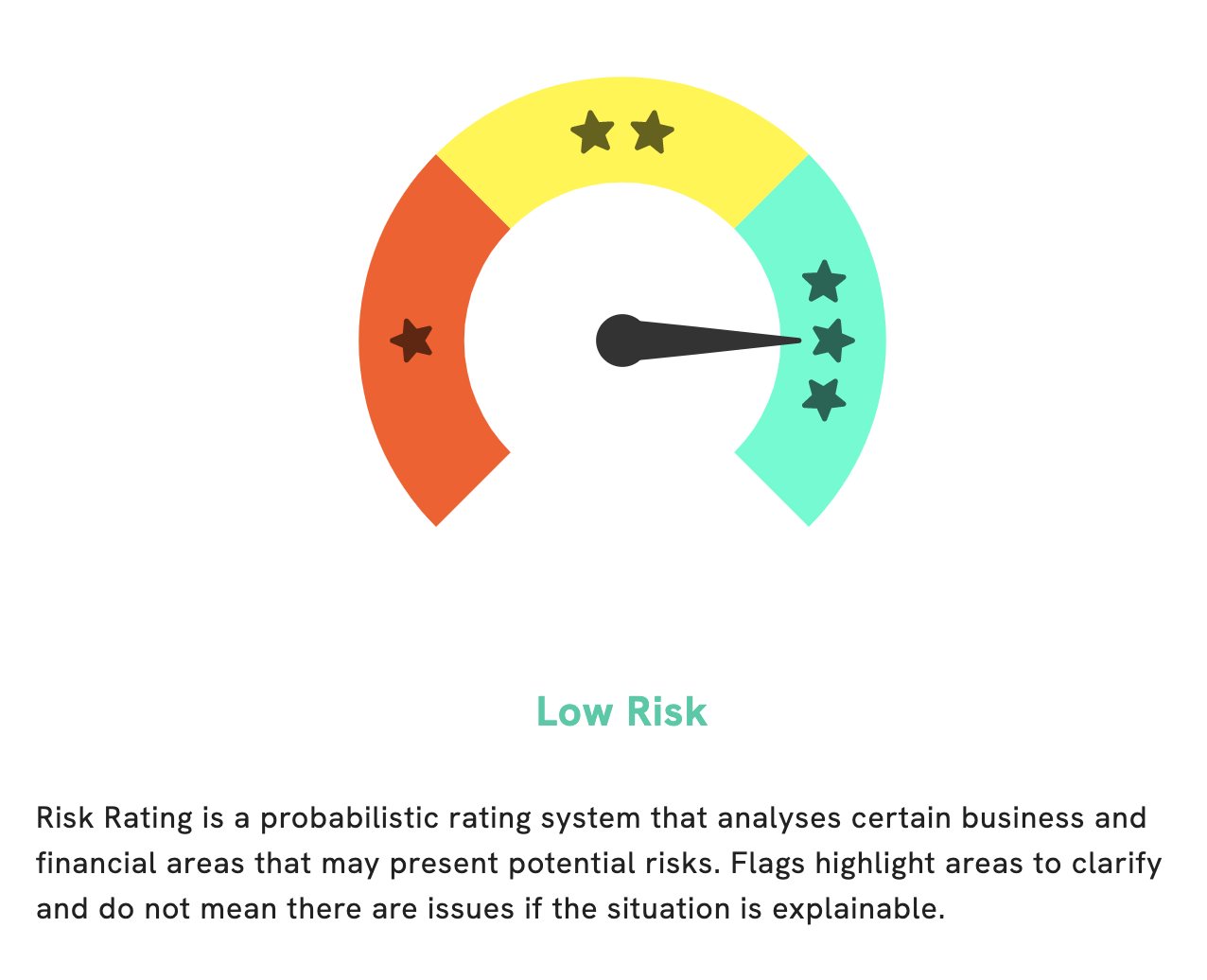
GoodWhale has conducted an analysis of WALMART INC and found it to be a low risk investment. It is important to note that low risk does not mean no risk. It merely indicates that the company is a relatively safe option for investors. That being said, there may be potential risks that are not always visible on the surface. By registering with GoodWhale, investors can gain access to an in-depth analysis of WALMART INC’s business and financial areas with potential risks. This analysis is important because it can help investors make informed decisions by providing insight into the company’s performance and stability. GoodWhale’s comprehensive analysis gives investors a comprehensive view of the company and allows them to be aware of any possible risks they may encounter. Overall, GoodWhale’s assessment of WALMART INC has indicated that it is a low risk option for investors. However, to ensure a successful investment experience, it is still important to do your own due diligence and research before investing. GoodWhale provides investors with an overview of the company’s financial and business areas, but it is ultimately up to the investor to decide if this is the right option for them. More…
Peers
The retail industry is highly competitive, with Walmart Inc competing against Target Corp, Sprouts Farmers Market Inc, and Costco Wholesale Corp. All four companies are vying for market share in the retail sector. Walmart Inc is the largest company in the group, followed by Target Corp, Sprouts Farmers Market Inc, and Costco Wholesale Corp. All four companies are publicly traded on the stock exchange.
– Target Corp ($NYSE:TGT)
Target Corp is an American retail corporation. The company was founded in 1902 and is headquartered in Minneapolis, Minnesota. Target operates 1,851 stores across the United States. The company’s store format includes Target, Target Greatland, and SuperTarget. Target is the second-largest discount retailer in the United States, behind Walmart. The company’s revenue for 2018 was $75.4 billion, and its operating income was $5.9 billion. Target’s net income for 2018 was $3.6 billion, and its total assets were $42.5 billion as of December 31, 2018.
– Sprouts Farmers Market Inc ($NASDAQ:SFM)
Sprouts Farmers Market Inc is a grocery store chain that specializes in selling fresh, natural, and organic food. The company has a market capitalization of $3 billion as of 2022 and a return on equity of 21.14%. Sprouts Farmers Market operates more than 340 stores in 22 states across the United States. The company was founded in 2002 and is headquartered in Phoenix, Arizona.
– Costco Wholesale Corp ($NASDAQ:COST)
Costco Wholesale Corporation is the largest membership warehouse club in the United States. As of 2022, it had a market capitalization of 209.47 billion and a return on equity of 24.62%. Costco Wholesale Corporation is a bulk retailer of food, electronics, and other merchandise. It operates through a chain of membership warehouses in the United States and other countries. Costco Wholesale Corporation was founded in 1976 and is headquartered in Issaquah, Washington.
Summary
Investors are viewing the retail sector with a selectively positive outlook, with Walmart leading the way in terms of year-to-date gains. Despite the cyclical risks in this sector, Walmart’s stock performance has remained strong, driven by a robust earnings per share (EPS). The media coverage has been mostly positive for the company, indicating that investors are confident in its future outlook. As a result, investors should consider Walmart as a viable investment option amidst the current market volatility.
Related Posts





Recent Posts













Investing Everyone Can Do.
Investing shouldn’t be exclusive to a select few. We believe everyone should have the opportunity to grow their wealth. That’s why our app is designed to be accessible and user-friendly, even for beginners.