
Meta Developing Search Engine for Chatbot Amid Concerns Over Apple’s Privacy Feature Impact
November 2, 2024

🌥️Trending News
Attention all Facebook users! As you may have heard, Meta ($NASDAQ:META), the parent company of Facebook, is reportedly developing a new search engine specifically for its chatbot. This move is a significant step towards decreasing Facebook’s reliance on technology and addressing potential privacy issues. It is also a publicly traded company with a strong presence in the stock market. With their latest move to develop a specialized search engine for their chatbot, it is evident that Meta is constantly adapting and evolving to stay ahead in the highly competitive market. So what exactly is this new search engine all about? Well, it is designed to enhance the chatbot’s capabilities by providing more accurate and relevant search results within conversations. This means that users can expect a more seamless experience when interacting with chatbots on Facebook platforms.
Additionally, this new development could also improve the overall user experience by making it easier to find information within conversations. The decision to create a specialized search engine for their chatbot comes at a crucial time for Meta. This had a significant impact on Facebook’s ability to collect user data, ultimately affecting its advertisement revenue. By creating their own search engine, Meta aims to reduce their dependence on external technology and therefore mitigate any potential impact from similar privacy updates in the future. While this may seem like a positive step towards addressing privacy concerns, some may argue that it is simply an attempt to maintain control over user data. As a company that relies heavily on targeted advertising, it is no surprise that Facebook would want to have more control over the data collected through its chatbots. Only time will tell if this move will truly benefit user privacy or if it is simply a strategic business move for Meta. In conclusion, the development of a specialized search engine for chatbots by Meta is a significant move that reflects the company’s efforts to adapt and evolve in the face of changing technology and privacy concerns. Keep an eye out for more updates on this exciting development!
Market Price
Attention all tech enthusiasts! Facebook is making headlines once again with its latest move to develop a meta search engine for chatbots. This comes amidst growing concerns over the impact of Apple’s new privacy feature on the social media giant’s advertising revenue. As the week kicked off, Facebook’s stocks opened at $582.0 and closed at $578.16, showing a 0.86% increase from its previous closing price of $573.25. The development of a meta search engine for chatbots is a strategic move by Facebook to enhance the user experience and cater to the increasing demand for chatbots in the digital world. With this new feature, users will be able to access a wide range of information and services through chatbots, making their interactions with businesses and brands more seamless and efficient.
However, this move has also raised concerns over how it will impact Facebook’s advertising revenue. Apple’s recent privacy feature, which allows users to opt-out of targeted ads, has already caused a stir in the digital advertising world. With the new meta search engine, Facebook may have to find alternative ways to gather user data for targeted advertising, which could potentially affect their revenue. Despite these concerns, Facebook remains confident in its ability to navigate through these challenges and continue providing valuable services to its users. The company has a strong track record of adapting to changing market trends and staying ahead of the game. As they continue to innovate and evolve, we can expect to see more exciting developments from Facebook in the future. While concerns over Apple’s privacy feature may pose challenges, we can expect Facebook to overcome them with their innovative strategies and determination. Stay tuned for more updates on this exciting development! #Facebook #MetaSearchEngine #Chatbots #ApplePrivacyFeature Live Quote…
About the Company
Income Snapshot
Below shows the total revenue, net income and net margin for Meta Platforms. More…
| Total Revenues | Net Income | Net Margin |
| 134.9k | 39.1k | 29.2% |
Cash Flow Snapshot
Below shows the cash from operations, investing and financing for Meta Platforms. More…
| Operations | Investing | Financing |
| 71.11k | -24.5k | -19.5k |
Balance Sheet Snapshot
Below shows the total assets, liabilities and book value per share for Meta Platforms. More…
| Total Assets | Total Liabilities | Book Value Per Share |
| 229.62k | 76.45k | 60.08 |
Key Ratios Snapshot
Some of the financial key ratios for Meta Platforms are shown below. More…
| 3Y Rev Growth | 3Y Operating Profit Growth | Operating Margin |
| 16.2% | 12.7% | 35.5% |
| FCF Margin | ROE | ROA |
| 32.5% | 20.2% | 13.0% |
Analysis
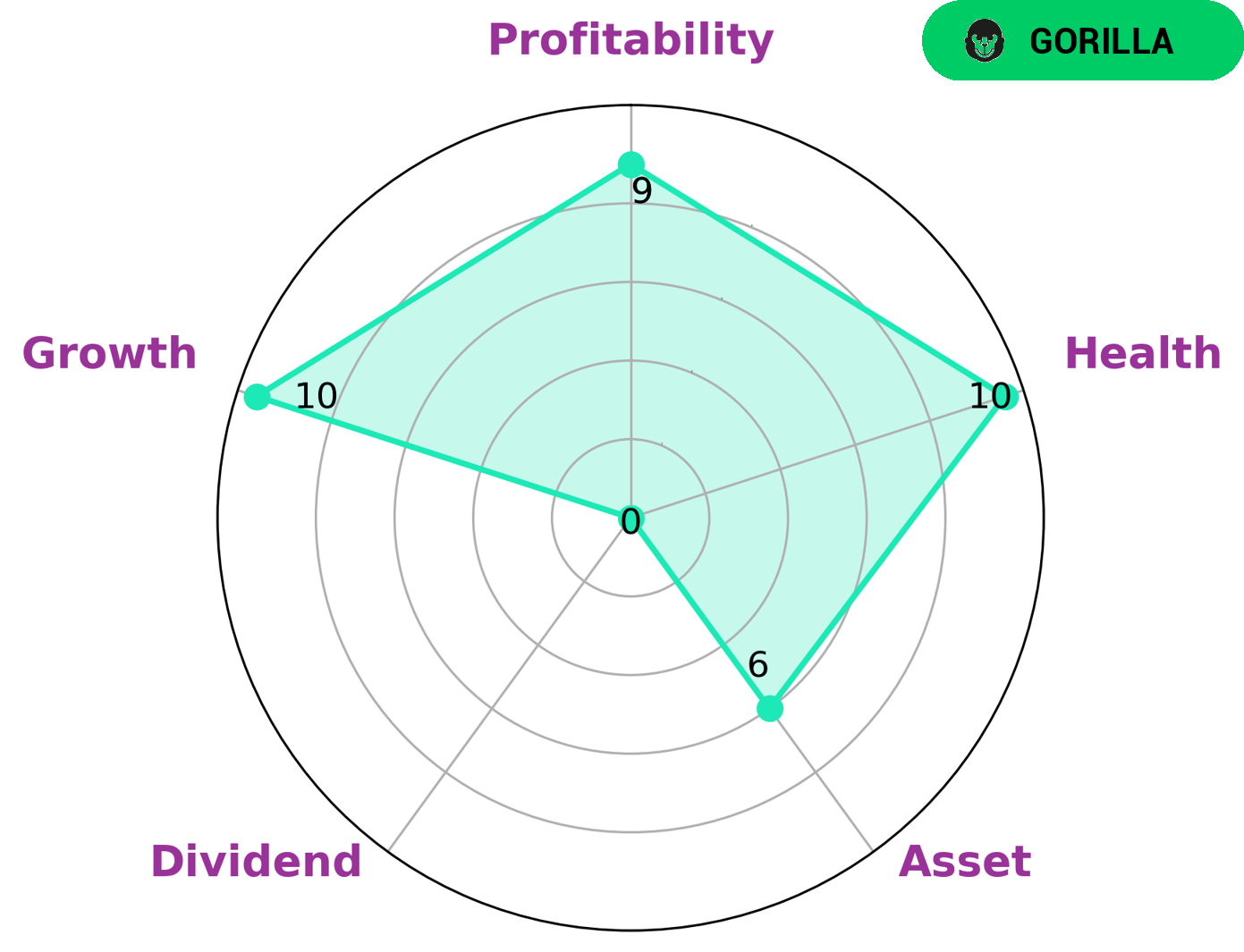
After conducting a thorough analysis of Facebook’s financials, I have determined that the company is classified as a ‘gorilla’ according to Star Chart. This means that Facebook has achieved stable and high revenue or earning growth, thanks to its strong competitive advantage in the market. As a result, I believe that investors who are interested in companies with a strong competitive advantage, stable revenue and earning growth, and potential for long-term success would be interested in Facebook. This includes growth-oriented investors who are willing to take on some risk for potentially high returns, as well as value investors who are looking for undervalued companies with potential for growth. One of the key factors that contributed to Facebook’s classification as a ‘gorilla’ is its high health score of 10/10. This takes into account the company’s cashflows and debt, and indicates that Facebook is capable of sustaining future operations even in times of crisis. This is a strong indicator of the company’s financial stability and ability to weather any challenges that may arise. In terms of specific financial metrics, Facebook scores highly in growth and profitability, indicating its strong performance in generating revenue and maintaining healthy profit margins. However, it is only considered medium in assets, suggesting that the company may not have a large amount of tangible assets. Additionally, Facebook is classified as weak in dividend, which means that the company may not prioritize distributing profits to shareholders through dividends. Overall, based on my analysis, I believe that Facebook is an attractive investment opportunity for investors looking for a strong and stable company with potential for continued growth and success. Its high health score and strong performance in key financial metrics make it a compelling choice for a range of investors. More…
Peers
In the social media landscape, there is intense competition among Meta Platforms Inc, Alphabet Inc, Snap Inc, and Twitter Inc. All four companies are vying for user engagement and market share. Each company has its own unique features and offerings, which appeals to different types of users.
– Alphabet Inc ($NASDAQ:GOOGL)
Alphabet Inc., formerly Google Inc., is an American multinational technology company that specializes in Internet-related services and products, which include online advertising technologies, search engine, cloud computing, software, and hardware.
The company was founded in 1998 by Larry Page and Sergey Brin while they were Ph.D. students at Stanford University in California. Together, they own about 14 percent of its shares and control 56 percent of the stockholder voting power through supervoting stock. They incorporated Google as a privately held company on September 4, 1998. An initial public offering (IPO) took place on August 19, 2004, and Google moved to its headquarters in Mountain View, California, nicknamed the Googleplex. In August 2015, Google announced plans to reorganize its various interests as a conglomerate called Alphabet Inc. Google is Alphabet’s leading subsidiary and will continue to be the umbrella company for Alphabet’s Internet interests. Sundar Pichai was appointed CEO of Google, replacing Larry Page who became the CEO of Alphabet.
– Snap Inc ($NYSE:SNAP)
Snap Inc is an American technology and camera company, founded on September 16, 2011, by Evan Spiegel and Bobby Murphy and based in Santa Monica, California. The company specializes in a mobile app that allows users to send and receive “snaps”, or photo and video messages. The app also allows users to add filters and effects to their photos and videos.
As of 2022, Snap Inc has a market cap of 17.46B and a Return on Equity of -13.96%. The company has been facing some challenges lately, with slowing user growth and competition from other social media platforms. However, Snap Inc remains a popular app among young people and continues to innovate with new features, such as augmented reality lenses.
– Twitter Inc ($NYSE:TWTR)
Twitter Inc, a publicly traded company, has a market capitalization of 38.83 billion as of 2022. The company’s return on equity, a measure of profitability, was 0.14% for the same year. Twitter Inc is a social networking and microblogging service that enables its users to send and read short 140-character messages called “tweets”.
Summary
Facebook’s parent company, Meta, is reportedly developing a dedicated search engine for its chatbot in response to the impact of an Apple privacy feature introduced three years ago. This move is seen as an effort to reduce Meta’s reliance on technology giants like Apple and Google. As Facebook continues to face scrutiny over its data practices and privacy concerns, this investment in developing its own search engine could potentially provide more control over user data and revenue streams. Additionally, this move may also position Meta to be less dependent on advertising revenue and diversify its sources of income.
Related Posts





Recent Posts













Investing Everyone Can Do.
Investing shouldn’t be exclusive to a select few. We believe everyone should have the opportunity to grow their wealth. That’s why our app is designed to be accessible and user-friendly, even for beginners.