
Investor Alert: Why One Trader Sold Home Depot Shares
December 22, 2023

☀️Trending News
As an investor in Home Depot ($NYSE:HD), I recently sold my shares of the company. Despite its impressive performance over the past few years, I made the decision to sell my shares for several reasons. One of the main reasons I decided to sell my shares was the company’s recent stock performance. This is a significant decline for a company that has seen so much success in recent years. This stock performance has caused me to question whether Home Depot is still a good investment going forward. Another factor that played a role in my decision was the current economic and political landscape. The US economy is slowing down, and the US-China trade war has been causing uncertainty in the markets.
These issues could have a major impact on the home improvement industry, and Home Depot’s stock performance could suffer as a result. Finally, I was concerned about Home Depot’s debt levels. The company’s debt-to-equity ratio is very high, and this could have an adverse effect on its cash flow, profitability, and ultimately its stock performance. All these factors combined made me decide to sell my shares of Home Depot. While this may have been a good decision for me, it does not mean that it is a bad investment for everyone. Investors should still evaluate Home Depot’s stock on their own before making any decisions about their own investments.
Price History
Investors were particularly surprised when one trader sold a large portion of their shares in Home Depot on Wednesday. Share prices opened the day at $351.0 and closed at $348.7, resulting in a 1.0% decrease from the previous closing price of $352.1. Whether this sale was an individual trader’s decision or was made on behalf of a larger fund remains to be seen, but either way, it may be an indicator of where the market is headed in the near future. Investors should remain alert to any further changes in Home Depot’s stock and should take any potential sell-off as a warning sign. Live Quote…
About the Company
Income Snapshot
Below shows the total revenue, net income and net margin for Home Depot. More…
| Total Revenues | Net Income | Net Margin |
| 153.71k | 15.7k | 10.2% |
Cash Flow Snapshot
Below shows the cash from operations, investing and financing for Home Depot. More…
| Operations | Investing | Financing |
| 21.03k | -4.04k | -17.37k |
Balance Sheet Snapshot
Below shows the total assets, liabilities and book value per share for Home Depot. More…
| Total Assets | Total Liabilities | Book Value Per Share |
| 75.58k | 74.15k | 1.33 |
Key Ratios Snapshot
Some of the financial key ratios for Home Depot are shown below. More…
| 3Y Rev Growth | 3Y Operating Profit Growth | Operating Margin |
| 7.0% | 8.2% | 14.6% |
| FCF Margin | ROE | ROA |
| 11.6% | 1051.7% | 18.6% |
Analysis
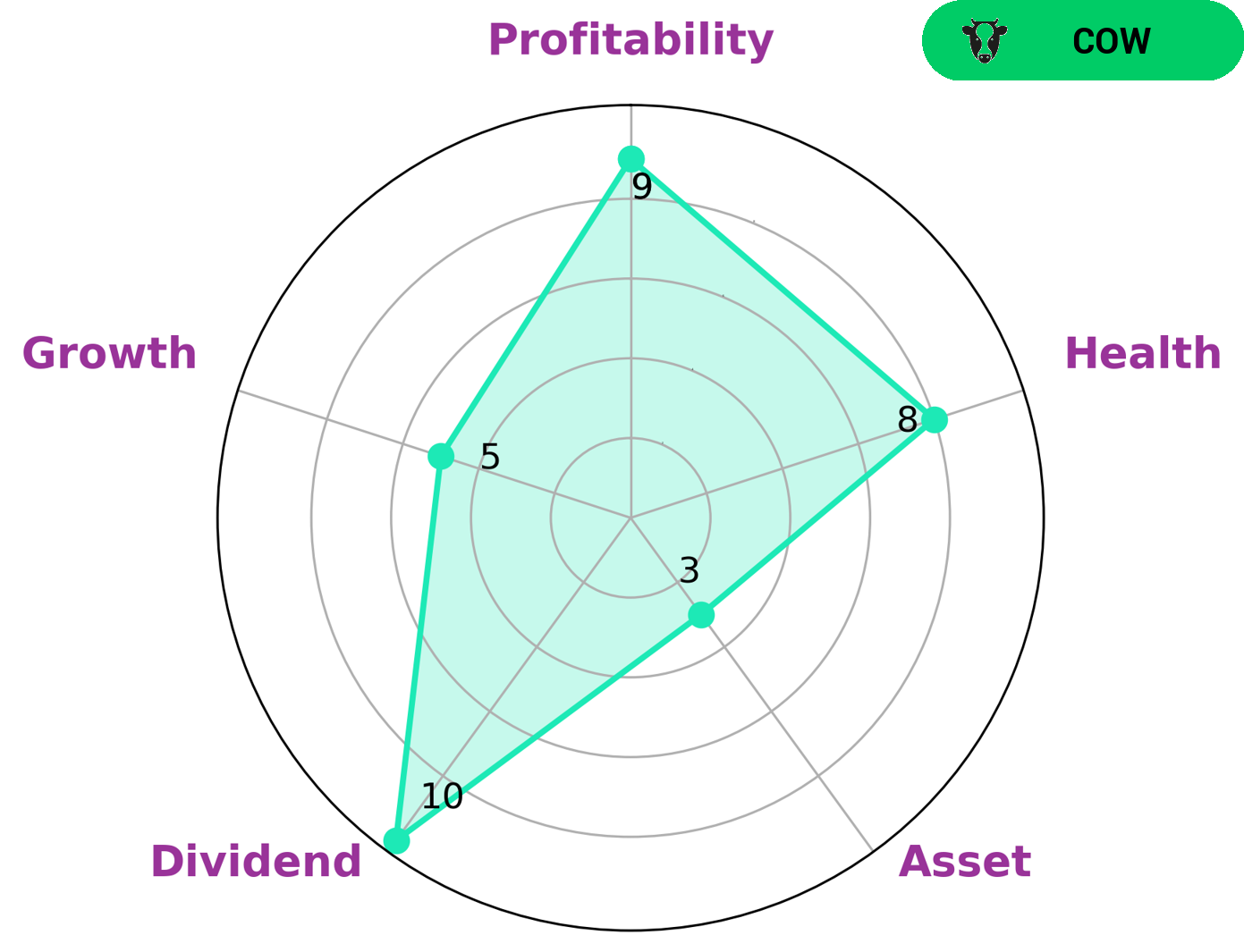
GoodWhale’s assessment of Home Depot‘s fundamentals shows that the company is strong in dividend and profitability, and medium in growth. It is classified as a ‘cow’, meaning that it has a track record of paying out consistent and sustainable dividends. Its high health score of 8/10, with regard to cashflows and debt, indicates that it is capable of paying off debt and funding future operations. Given Home Depot’s status as a ‘cow’, investors looking for consistent returns and dividends are likely to be interested in this company. Its strong dividend and profitability metrics, combined with its ability to pay off debt and fund operations, makes it an attractive option for those looking for a reliable return. The medium growth rating is also likely to appeal to investors who want to reap the rewards of a company that is growing steadily but not too quickly. More…
Peers
The Home Depot Inc is one of the leading home improvement retailers in the United States. The company operates more than 2,200 stores across the country. Lowe’s Companies Inc is another leading home improvement retailer in the United States. The company operates more than 1,700 stores across the country. Floor & Decor Holdings Inc is a leading specialty retailer of hard surface flooring in the United States. The company operates more than 100 stores across the country. Wayfair Inc is a leading online retailer of home furnishings and home décor products.
– Lowe’s Companies Inc ($NYSE:LOW)
Lowe’s Companies, Inc. is a home improvement company that operates stores in the United States, Canada, and Mexico. The company offers a wide variety of home improvement products, including appliances, tools, hardware, flooring, and more. Lowe’s is also involved in home improvement services, such as installation, repair, and remodeling. The company has a market cap of $114.17B and a return on equity of -99.39%.
– Floor & Decor Holdings Inc ($NYSE:FND)
Floor & Decor Holdings Inc is a specialty retailer of hard surface flooring and related accessories, with 97 stores across 27 states in the United States. The company offers a wide selection of ceramic tile, porcelain tile, natural stone, wood flooring, laminate, and vinyl flooring products. It also provides installation services for customers who purchase their products. Floor & Decor Holdings Inc has a market cap of 7.06B as of 2022, a Return on Equity of 14.88%.
– Wayfair Inc ($NYSE:W)
As of 2022, Wayfair Inc has a market cap of 3.37B and a Return on Equity of 29.2%. The company provides an online platform for home goods and furniture retailers. It operates through two segments, Direct and Marketplace. The Direct segment offers products through its own website. The Marketplace segment offers products through third-party websites.
Summary
Home Depot (HD) has been a popular stock over the past few years as it has seen strong customer demand across its business segments.
However, recent declines in the stock have made it less attractive to investors, prompting some to consider selling their shares. Though the company has been able to outperform its peers in terms of quarterly earnings and strong balance sheet, there are some concerns that the current market environment could cause a slowdown in HD’s growth. As such, investors should weigh their risk tolerance before investing in the stock and consider selling if they think there is too much downside risk.
Additionally, investors should be aware of potential political and economic risks associated with the company.
Related Posts





Recent Posts













Investing Everyone Can Do.
Investing shouldn’t be exclusive to a select few. We believe everyone should have the opportunity to grow their wealth. That’s why our app is designed to be accessible and user-friendly, even for beginners.