
Nordstrom dividend yield calculator – Nordstrom Declares Quarterly Dividend of $0.19/Share, Yielding 3.9%
March 6, 2023

Trending News 🌥️
Nordstrom dividend yield calculator – Nordstrom ($NYSE:JWN) recently declared a quarterly dividend of $0.19 per share, which is the same payout as the last quarter. This dividend is payable on March 29, 2021 to shareholders of record on March 14, 2021, with an ex-dividend date of March 13. This dividend offers an annualized forward yield of 3.9%, making it attractive for investors. More information on Nordstrom’s dividend can be found on Seeking Alpha, such as its dividend scorecard, yield chart, and dividend growth.
This provides investors with more insight into the company’s financials and performance over time. Overall, Nordstrom’s quarterly dividend of $0.19 per share offers a forward yield of 3.9%, which makes it an attractive investment for those looking to grow their portfolio. The company’s dividend scorecard, yield chart and dividend growth available on Seeking Alpha provide further insight into the company’s financials and performance.
Dividends – Nordstrom dividend yield calculator
Nordstrom has just declared its quarterly dividend of $0.19/share, yielding 3.9%. This is higher than the annual dividend per share it has issued in the last two years, which were $0.57 and $0.37 USD respectively. Nordstrom has also set a target for dividend yields for 2021 to 2023 of 2.32%, 1.06%, and an average yield of 1.69%. This marks an overall increase in the yearly dividend for Nordstrom shareholders, offering investors a return on their investment as well as a secure stream of income.
About the Company
Income Snapshot
Below shows the total revenue, net income and net margin for Nordstrom. More…
| Total Revenues | Net Income | Net Margin |
| 15.7k | 326 | 2.1% |
Cash Flow Snapshot
Below shows the cash from operations, investing and financing for Nordstrom. More…
| Operations | Investing | Financing |
| 668 | -386 | -252 |
Balance Sheet Snapshot
Below shows the total assets, liabilities and book value per share for Nordstrom. More…
| Total Assets | Total Liabilities | Book Value Per Share |
| 9.39k | 8.79k | 3.79 |
Key Ratios Snapshot
Some of the financial key ratios for Nordstrom are shown below. More…
| 3Y Rev Growth | 3Y Operating Profit Growth | Operating Margin |
| 0.5% | -11.0% | 3.7% |
| FCF Margin | ROE | ROA |
| 1.3% | 56.9% | 3.8% |
Price History
Following this announcement, the stock opened at $19.2 and later closed at $19.0 at the end of the trading day, down by 2.5% from its last closing price of $19.5. Investors should take note that this dividend will be payable on a quarterly basis going forward. Live Quote…
Analysis
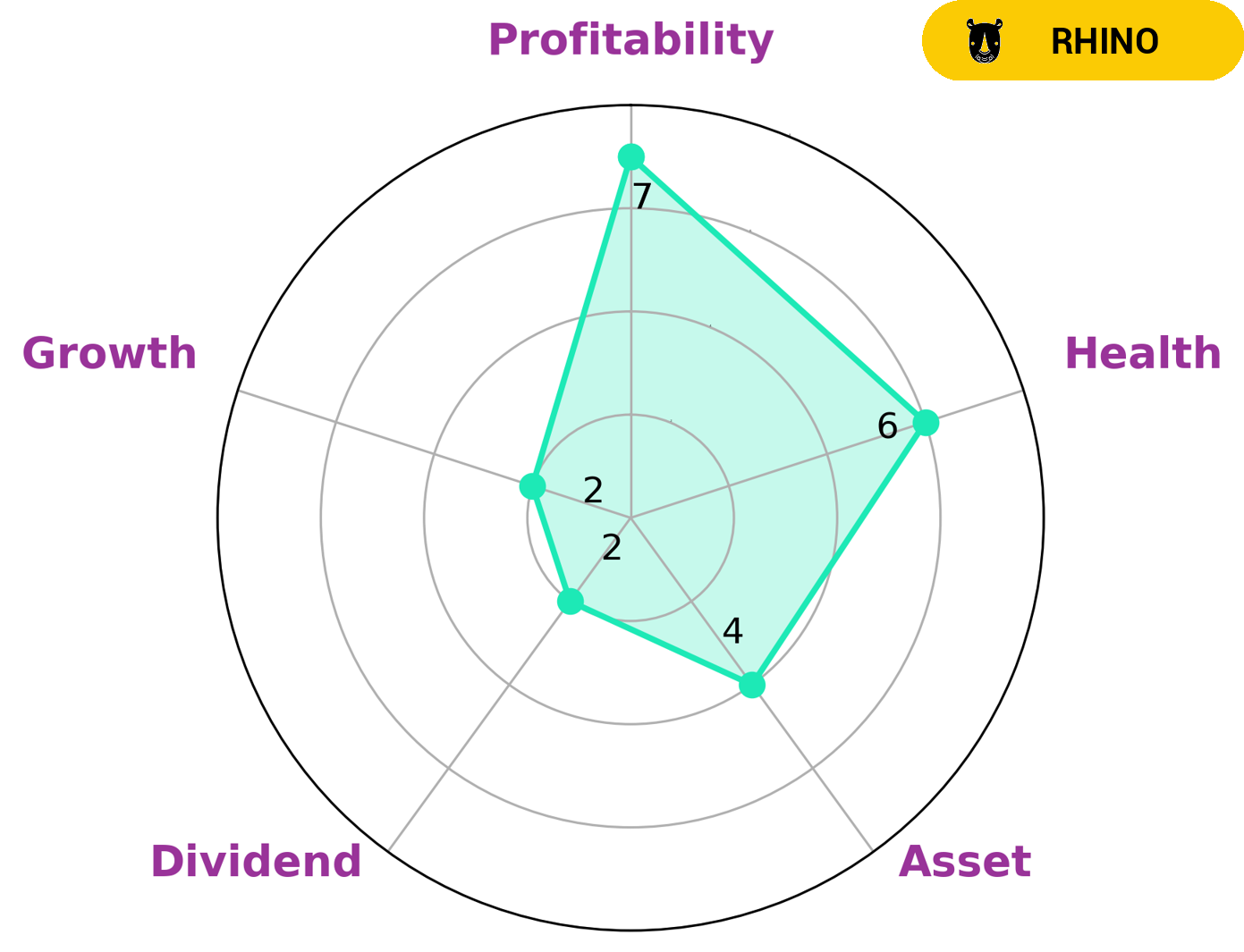
At GoodWhale, we analyzed NORDSTROM‘s wellbeing and categorized the company according to the Star Chart, which identifies them as ”rhino” – a type of company that has achieved moderate revenue or earnings growth. This suggests that NORDSTROM may be attractive to value investors and those looking for higher dividend yields. NORDSTROM is strong in terms of profitability and medium in terms of asset management, however, it is weak when it comes to growth metrics and dividend yields. Additionally, NORDSTROM has an intermediate health score of 6/10 with regard to its cashflows and debt, which could indicate their ability to sustain future operations in times of crisis. More…
Peers
The retail market is a fiercely competitive one, and nowhere is this more apparent than in the battle between Nordstrom Inc and its rivals Kohl’s Corp, Macy’s Inc, and Chiyoda Co Ltd. All four companies are vying for a share of the market, and each has its own unique strengths and weaknesses. Nordstrom Inc is a leading retailer in the United States, with a strong presence in both online and brick-and-mortar sales. Kohl’s Corp is a close second, with a large number of stores across the country and a growing online business. Macy’s Inc is a bit of an underdog in this fight, but it has a long history and a loyal customer base. Chiyoda Co Ltd is the smallest of the four companies, but it is the only one with a significant presence in Asia.
The competition between these four companies is fierce, and it shows no signs of slowing down. Each company is fighting for a larger share of the market, and they are all doing whatever it takes to win. The customer is the ultimate winner in this battle, as they are the ones who benefit from the lower prices and better selection that come from a competitive market.
– Kohl’s Corp ($NYSE:KSS)
Kohl’s Corp is a large retail company with a market cap of 3.37B as of 2022. The company has a Return on Equity of 16.46%. Kohl’s Corp is a retailer that operates primarily in the United States. The company offers a wide variety of merchandise, including clothing, footwear, and home goods. Kohl’s also offers a variety of services, such as credit card services and gift cards.
– Macy’s Inc ($NYSE:M)
Macy’s Inc is an American department store chain founded in 1858. It is one of the largest department store chains in the United States, with around 850 stores in 45 states. Macy’s Inc has a market cap of $5.14B as of 2022 and a Return on Equity of 40.81%. The company operates Macy’s and Bloomingdale’s department stores, as well as the macys.com and bloomingdales.com websites. Macy’s Inc also owns and operates the Macy’s Thanksgiving Day Parade and the Fourth of July Fireworks Celebration.
– Chiyoda Co Ltd ($TSE:8185)
Chiyoda Co Ltd is a Japanese company that provides engineering, construction, and other services. The company has a market capitalization of 25.03 billion as of 2022 and a return on equity of -2.63%. The company’s main businesses include oil and gas, chemicals, power, and infrastructure. Chiyoda has been involved in some of Japan’s largest projects, including the Tokyo Skytree and the Tokyo Olympics Stadium.
Summary
Nordstrom, a department store company, has recently declared a quarterly dividend of $0.19 per share, providing investors with a 3.9% yield. Analysts are optimistic about the stock’s future, citing strong financial results in their projections. Nordstrom has a strong balance sheet and is well-positioned to handle the potential impacts of the current economic environment.
Additionally, the company is capitalizing on digital initiatives, pursuing cost-cutting measures to manage expenses. Investors are advised to take a long-term approach when considering investing in Nordstrom, as the company is likely to continue providing a steady dividend stream while continuing to expand its digital presence.
Related Posts





Recent Posts













Investing Everyone Can Do.
Investing shouldn’t be exclusive to a select few. We believe everyone should have the opportunity to grow their wealth. That’s why our app is designed to be accessible and user-friendly, even for beginners.