
Boot Barn’s Shares Plummet Following Disappointing Financial Results for Fiscal Q2 2025
November 13, 2024

🌧️Trending News
Boot Barn ($NYSE:BOOT) is a popular retail chain that specializes in western and workwear clothing, boots, and accessories. These disappointing financial results have caused Boot Barn’s stock to drop by nearly 10% in after-hours trading. One of the main reasons for Boot Barn’s decline in revenue and profits is attributed to the company’s slow e-commerce growth. Despite the overall growth in online shopping, Boot Barn’s website sales only increased by 3% in the second quarter. This slow growth rate is concerning, especially considering the increasing popularity of online shopping among consumers.
In addition, the company faced challenges with inventory management and supply chain disruptions, which affected their ability to meet customer demand. In order to turn things around, Boot Barn plans to focus on improving their e-commerce platform and expanding their product offerings. They also plan to invest in marketing and advertising efforts to attract more customers and increase foot traffic in their stores.
Additionally, the company will continue to evaluate their inventory management processes and address any supply chain issues to ensure timely delivery of products to their stores. Despite the current decline in Boot Barn’s stock, analysts remain optimistic about the company’s future. With their strong brand reputation and loyal customer base, coupled with their plans for growth and improvement, Boot Barn has the potential to bounce back from this setback and continue to be a leading retailer in the western and workwear market.
Share Price
The stock opened at $135.88 and closed at $134.63, representing a 1.3% decrease from the previous day’s closing price of $136.41. The sharp decline in Boot Barn‘s stock price can be attributed to the company missing analyst expectations for both revenue and earnings. This significant drop in both revenue and EPS highlights the challenges Boot Barn has faced in the past quarter. The company has been struggling with supply chain disruptions, which have affected its ability to meet customer demand. This issue has been compounded by rising costs of raw materials and labor, leading to a decrease in profitability. This decline can be attributed to increased competition from e-commerce giants and the growing trend of consumers shifting towards online shopping. In response to these disappointing results, Boot Barn CEO Jim Conroy stated, “While we are disappointed with our second quarter performance, we remain committed to executing our strategic initiatives and driving long-term growth for our company.”
Conroy also highlighted that the company is working towards improving its supply chain and enhancing its digital capabilities to better serve its customers. Investors have reacted negatively to Boot Barn’s weak financial results, causing the stock price to plummet. It remains to be seen how the company will address these challenges and regain investor confidence in the coming quarters. The company’s failure to meet analyst expectations for revenue and earnings, along with challenges in its supply chain and online sales, have led to a decline in investor confidence. As the company works towards implementing strategic initiatives to address these issues, investors will be closely monitoring Boot Barn’s performance in the upcoming quarters. Live Quote…
About the Company
Income Snapshot
Below shows the total revenue, net income and net margin for Boot Barn. More…
| Total Revenues | Net Income | Net Margin |
| 1.7k | 163.97 | 9.6% |
Cash Flow Snapshot
Below shows the cash from operations, investing and financing for Boot Barn. More…
| Operations | Investing | Financing |
| 242.3 | -132.78 | -52.75 |
Balance Sheet Snapshot
Below shows the total assets, liabilities and book value per share for Boot Barn. More…
| Total Assets | Total Liabilities | Book Value Per Share |
| 1.67k | 762.56 | 30.06 |
Key Ratios Snapshot
Some of the financial key ratios for Boot Barn are shown below. More…
| 3Y Rev Growth | 3Y Operating Profit Growth | Operating Margin |
| 27.4% | 52.2% | 13.1% |
| FCF Margin | ROE | ROA |
| 6.4% | 15.8% | 8.3% |
Analysis
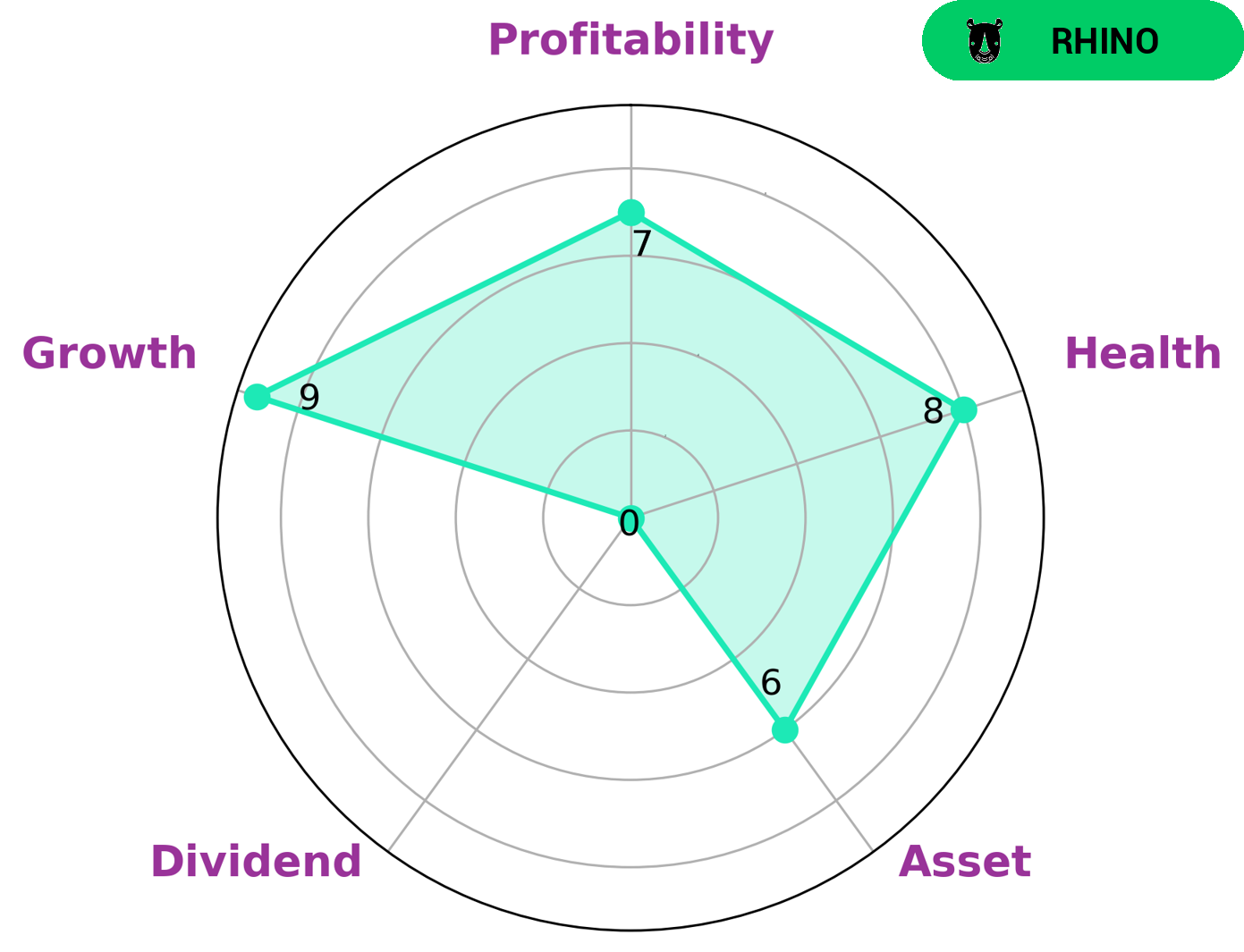
After conducting a thorough analysis of BOOT BARN‘s financials, I have come to the conclusion that this company falls under the category of a ‘rhino’ according to our Star Chart. This means that BOOT BARN has achieved moderate revenue or earnings growth. Investors who may be interested in a company like BOOT BARN are those who are looking for moderate growth and stable returns. Rhino companies are known for their consistent performance and potential for future growth, making them a desirable investment option for those looking for long-term gains. One of the key strengths of BOOT BARN is its strong profitability. This means that the company is able to generate healthy profits from its operations, which is a positive sign for investors. Additionally, BOOT BARN has shown significant growth in recent years, which further adds to its appeal as an investment opportunity. However, it is worth noting that BOOT BARN falls in the medium range when it comes to assets. This means that the company may not have a large amount of assets compared to other companies, but it is still able to effectively utilize its assets to generate profits and sustain growth. On the downside, BOOT BARN is weak in terms of dividend payouts. This means that the company may not distribute a significant portion of its profits as dividends to shareholders. For investors looking for regular dividend income, this may not be an ideal option. Overall, BOOT BARN has a high health score of 8/10 based on its cashflows and debt. This indicates that the company is capable of paying off its debts and funding future operations without much difficulty. This adds to its attractiveness as an investment opportunity and shows that the company is financially stable. In conclusion, BOOT BARN is a ‘rhino’ company with strong profitability, steady growth, and a high health score. This makes it a desirable option for investors looking for stable and moderate returns. However, for those seeking regular dividend income, BOOT BARN may not be the best choice. As always, it is important for investors to conduct their own research and due diligence before making any investment decisions. More…
Peers
The competition in the retail sector is fierce, with companies vying for market share in a number of ways. Boot Barn Holdings Inc is no exception, and competes against Christopher & Banks Corp, C’sMEN Co Ltd, and J.Jill Inc in a number of ways. While each company has its own strengths and weaknesses, the competition between them is intense, and the battle for market share is likely to continue.
– Christopher & Banks Corp ($OTCPK:CBKCQ)
Christopher & Banks Corporation is a Minnesota-based retailer of women’s apparel, accessories and footwear. The company operates under the Christopher & Banks, CJ Banks, and Missy & Plus names. It also offers merchandise through its e-commerce website and through a nationwide network of outlet stores. As of February 3, 2018, the company operated 942 stores in 44 states.
– C’sMEN Co Ltd ($TSE:3083)
MEN Co Ltd is a Japanese company that manufactures and sells electronic components. The company has a market cap of 1.52B as of 2022 and a Return on Equity of -12.39%. The company’s products include semiconductors, integrated circuits, and other electronic components.
– J.Jill Inc ($NYSE:JILL)
J.Jill Inc is a retailer of women’s apparel, accessories, and footwear. It operates through two segments, Retail and Direct. The company offers its products through retail stores, catalogs, and online. As of 2022, J.Jill Inc had a market cap of 186.02M and a Return on Equity of -233.39%. The company has been struggling in recent years, as evidenced by its negative ROE. J.Jill Inc is currently in the process of closing some of its stores in an effort to turn things around.
Summary
– Boot Barn‘s stock price took a hit after the company’s second quarter financial results were released. – The company’s performance for the quarter was not in line with expectations, leading to a decrease in investor confidence. – Boot Barn’s revenue and earnings fell short of analyst estimates, causing concern for future growth. – The company also reported a decline in same-store sales, indicating potential challenges in generating consistent customer demand. – Investors should closely monitor Boot Barn’s performance in the coming quarters to determine if this is a temporary setback or a sign of larger issues.
















Investing Everyone Can Do.
Investing shouldn’t be exclusive to a select few. We believe everyone should have the opportunity to grow their wealth. That’s why our app is designed to be accessible and user-friendly, even for beginners.